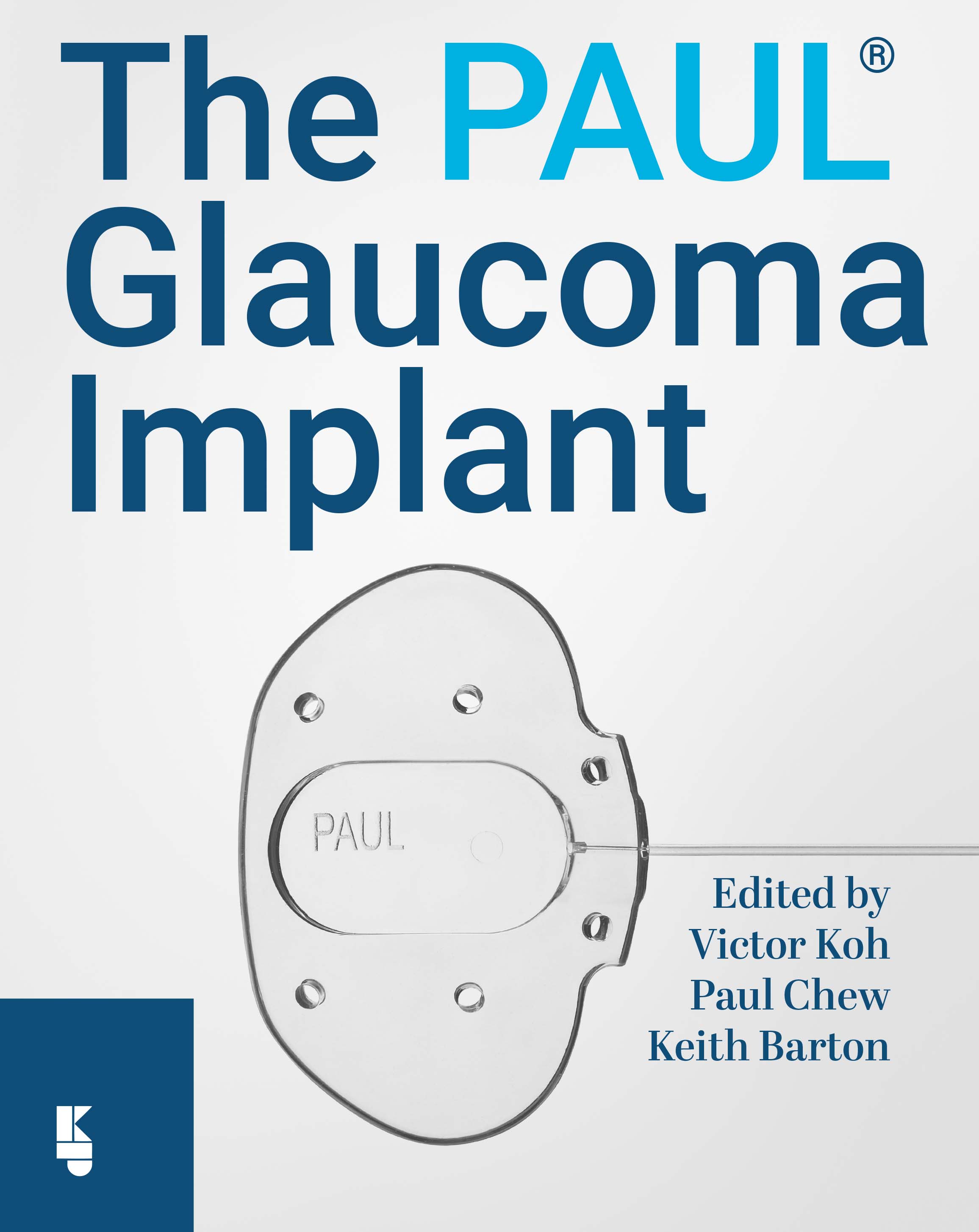
The PAUL Glaucoma Implant
edited by Victor Koh | Paul Chew | Keith Barton
Types of glaucoma implants
Glaucoma drainage devices (GDDs) offer an alternative route for aqueous humour outflow, redirecting it from the anterior chamber to the subconjunctival space, thereby lowering the intraocular pressure (IOP). Successful implantation requires a comprehensive preoperative evaluation, including ocular surface assessment, scleral integrity, as well as angle and lens status. Postoperative management includes anti-inflammatory and IOP-lowering medications, with attention to complications such as hypotony, hypertensive phase, tube blockage, and corneal decompensation. Surgical modifications help optimise outcomes in high-risk cases. Appropriate implant selection, meticulous surgical technique, and tailored postoperative care are critical for long-term success. This chapter discusses types of glaucoma implants, preoperative planning, surgical technique, and postoperative complications and their management.


@incollection{pgi2senthil,
  author    = {Senthil, Sirisha and Tulava, Sushma},
  title     = {Types of glaucoma implants},
  booktitle = {The PAUL Glaucoma Implant},
  editor    = {Koh, Victor and Chew, Paul and Barton, Keith},
  publisher = {Kugler Publications},
  address   = {Amsterdam},
  year      = {2026},
  pages     = {9-27},
  isbn      = {978-90-6299-335-2}
}