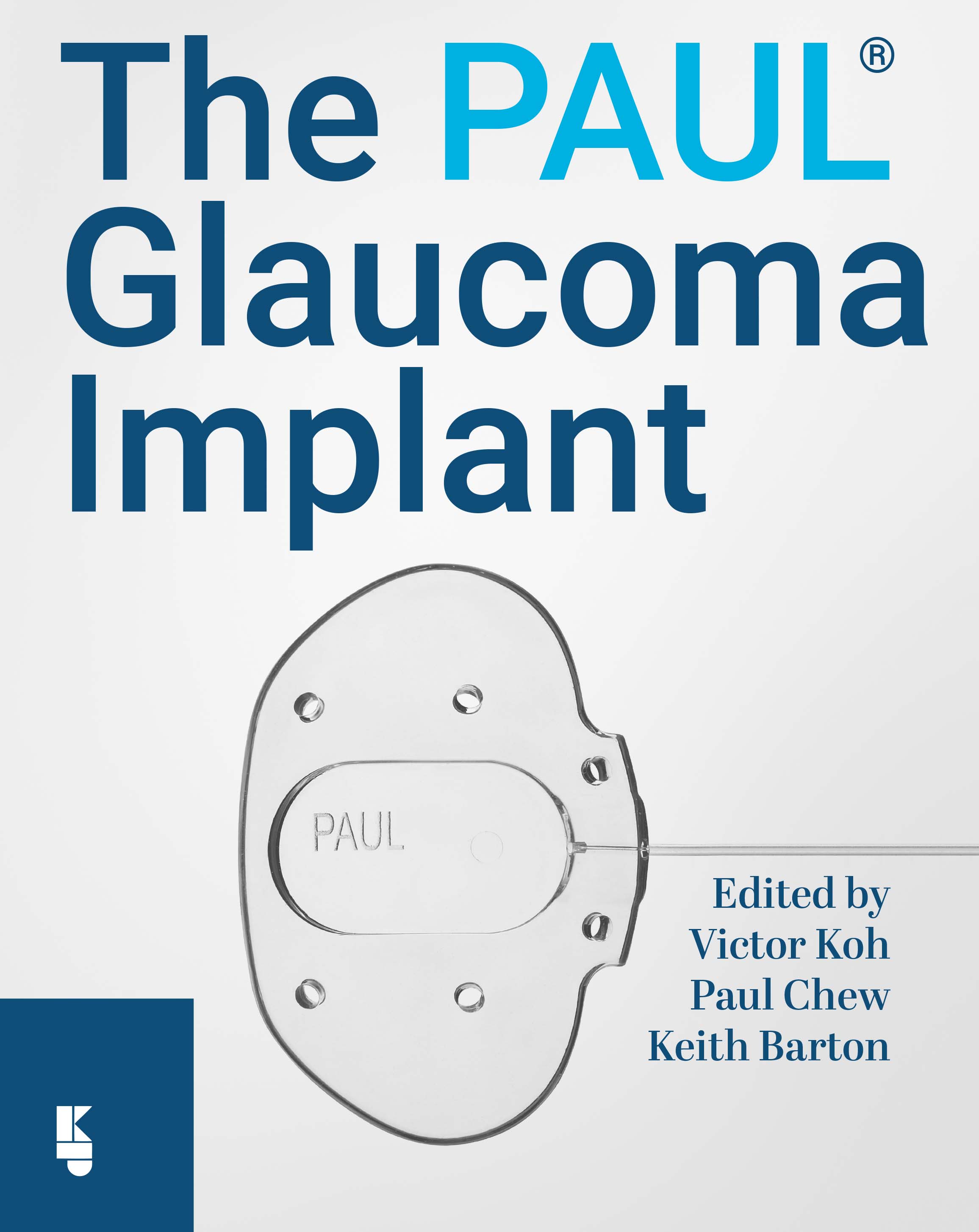
The PAUL Glaucoma Implant
edited by Victor Koh | Paul Chew | Keith Barton
Managing diplopia following PAUL Glaucoma Implant: prevention and treatment strategies
Persistent diplopia is a known complication following glaucoma drainage device (GDD) surgery, with incidence rates that can vary significantly. The PAUL® Glaucoma Implant (PGI) has shown a reduced incidence of diplopia compared to its predecessors, likely due to its design, which features enhanced pliability and material composition of the PGI plate. Restrictive strabismus remains the primary cause of diplopia following GDD, resulting from direct muscle pressure by the implant plate, scarring and adhesions affecting extraocular muscles, or displacement of the eye due to a hyperinflated bleb. Risk factors include older age, implant size, material, placement, and multiple GDDs. Prevention relies on meticulous surgical techniques to minimise inflammation and muscle restriction. Management options range from conservative approaches, such as prisms, to surgery. The latter poses challenges, including the risk of damaging a functioning bleb, though capsule-sparing techniques have been introduced to mitigate this. Botulinum toxin, while less effective in restrictive strabismus, warrants further exploration as a non-surgical alternative. Prospective studies are needed to confirm the PGI’s safety profile and its lower incidence of diplopia.
@incollection{pgi15asadiq,
  author    = {Sadiq, Salman N. and Vallabh, Neeru},
  title     = {Managing diplopia following PAUL Glaucoma Implant: prevention and treatment strategies},
  booktitle = {The PAUL Glaucoma Implant},
  editor    = {Koh, Victor and Chew, Paul and Barton, Keith},
  publisher = {Kugler Publications},
  address   = {Amsterdam},
  year      = {2026},
  pages     = {153-159},
  isbn      = {978-90-6299-335-2}
}