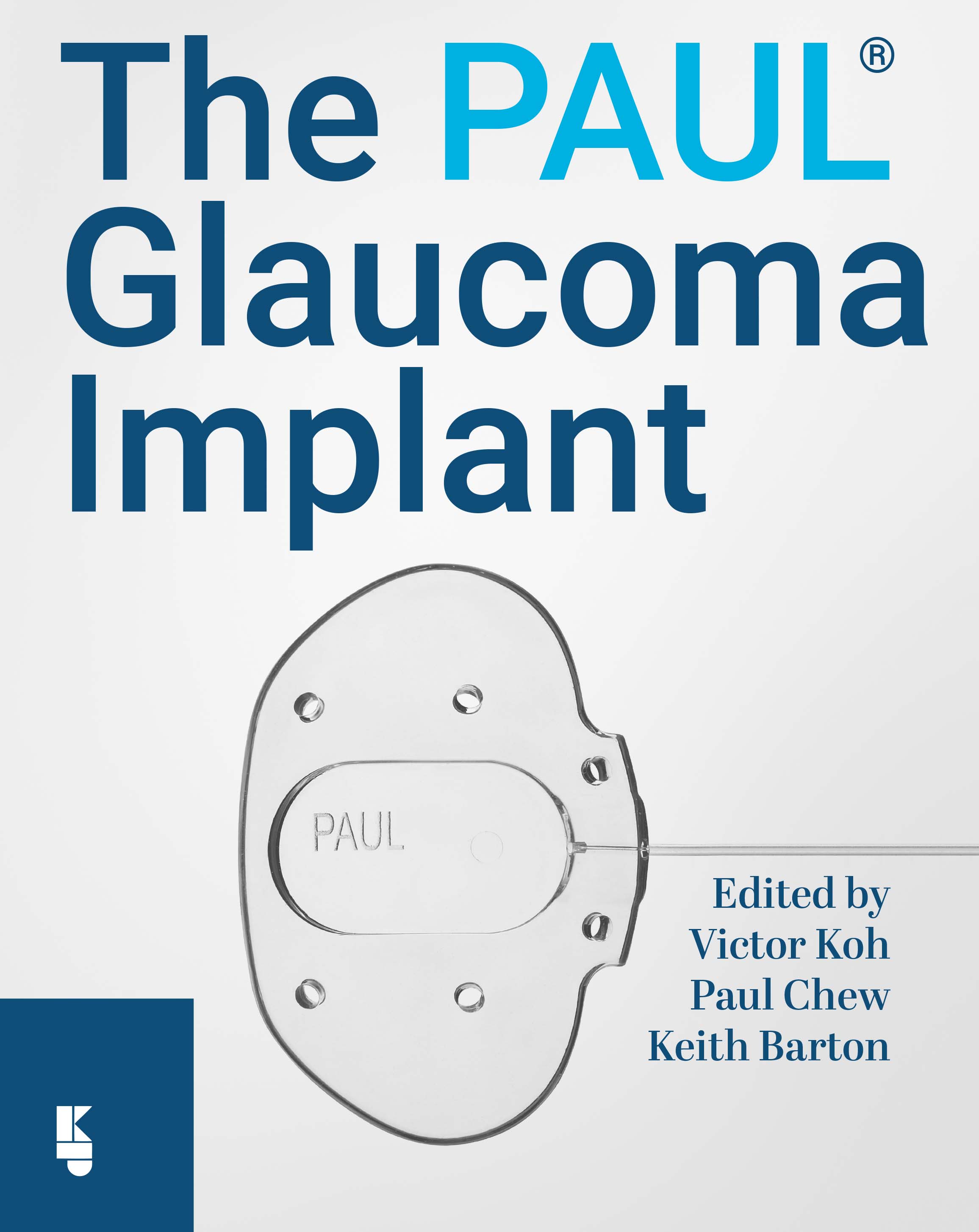
The PAUL Glaucoma Implant
edited by Victor Koh | Paul Chew | Keith Barton
PAUL Glaucoma Implant failure: prevention and management
The PAUL® Glaucoma Implant (PGI) is a relatively new addition to the array of glaucoma drainage devices (GDDs) designed to manage refractory glaucoma. The PGI features a biocompatible, non-valved design, that has a plate size of 342.1 mm2 compared to the Ahmed Glaucoma Valve (FP7, 184 mm2) and Baerveldt GDD (350 mm2). Although extensive literature is still lacking on the PGI, the first studies have demonstrated that the PGI is efficient in reducing intraocular pressure to target levels in patients with refractory glaucoma, including those with neovascular, uveitic, and possibly childhood glaucoma. However, despite its design advancements, failure of the PGI remains a possibility due to various factors, including unsuccessful postoperative management, too early or too late tube suture removal, fibrosis, tube extrusion, infection, or device malfunction. Early recognition and targeted interventions are critical to mitigating risks for failure. This chapter explores strategies to manage complications and approaches for when the implant fails and discusses patient selection and follow-up protocols to reduce likelihood of failure.
@incollection{pgi16hoffmann,
  author    = {Hoffmann, Esther M.},
  title     = {PAUL Glaucoma Implant failure: prevention and management},
  booktitle = {The PAUL Glaucoma Implant},
  editor    = {Koh, Victor and Chew, Paul and Barton, Keith},
  publisher = {Kugler Publications},
  address   = {Amsterdam},
  year      = {2026},
  pages     = {167-171},
  isbn      = {978-90-6299-335-2}
}