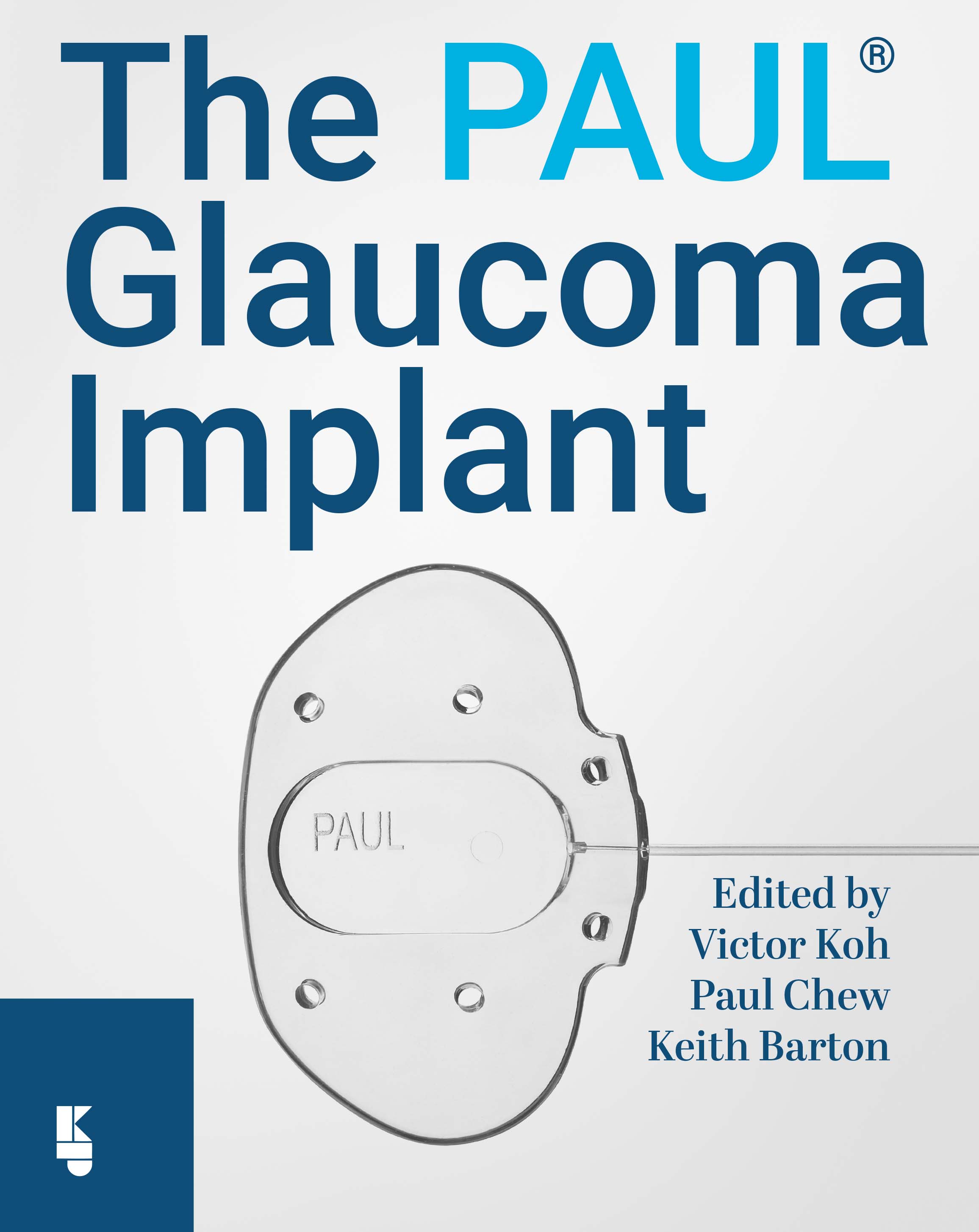
The PAUL Glaucoma Implant
edited by Victor Koh | Paul Chew | Keith Barton
The PAUL Glaucoma Implant in uveitic glaucoma
Uveitic glaucoma (UG) is a complex and vision-threatening condition that requires simultaneous management of elevated intraocular pressure (IOP) and intraocular inflammation. Traditional surgical treatments such as trabeculectomy often yield limited success in UG due to inflammation-related complications and lower long-term bleb survival. The PAUL® Glaucoma Implant (PGI), a novel non-valved drainage device with a smaller tube diameter and large plate surface area, has emerged as a promising alternative. Recent studies have shown that the PGI effectively lowers IOP and reduces medication burden with high complete and qualified success rates and a lower incidence of complications, such as hypotony. In patients with UG, the PGI has demonstrated more favourable outcomes than the Ahmed Glaucoma Valve and comparable efficacy to the Baerveldt implant, but with fewer hypotony-related events. Perioperative strategies—such as strict inflammation control, tailored stent removal timing, and early aqueous suppression—are crucial to optimising results. Although further large-scale studies are needed, current evidence supports the PGI as a safe and effective surgical option in the management of UG.
@incollection{pgi9lu,
  author    = {Lu, Da-Wen and Liu, Li-Ching},
  title     = {The PAUL Glaucoma Implant in uveitic glaucoma},
  booktitle = {The PAUL Glaucoma Implant},
  editor    = {Koh, Victor and Chew, Paul and Barton, Keith},
  publisher = {Kugler Publications},
  address   = {Amsterdam},
  year      = {2026},
  pages     = {79-89},
  isbn      = {978-90-6299-335-2}
}